Apple tree

The apple tree is a deciduous fruit tree of the Rosaceae family, widely cultivated in the mountainous and semi-mountainous regions of Greece, such as Zagora, Agia, Neurkopi, and Pieria. It is primarily grown for fresh consumption but also used for industrial purposes (such as juices and jams). Producers consider it highly valuable and mainly export it. Apple trees are planted in linear planting systems (e.g., palmette, axis shape) and begin to bear fruit in the third to fourth year. The lifespan of an apple orchard ranges from 20 to 30 years. The success of cultivation depends on the choice of variety and rootstock, the microclimate, proper fertilization, and strict plant protection.

Botanical characteristics

The apple tree (Malus domestica) is a deciduous tree of the Rosaceae family, native to Central Asia and cultivated in temperate zones. Growers cultivate it on dwarf or semi-dwarf rootstocks (2–4 m) and train it into shapes such as cups or spindles. It has woody and mixed buds, with hermaphroditic flowers in the corymbs in the spring. Bees cross-pollinate and require compatible varieties. The fruit is a pseudocarp (like an apple), characterized by a swollen hypocarp. The root system depends on the rootstock: dwarf for shallow growth and seedling for deep rooting.
Physiological characteristics

Distinct phenological stages characterize the apple tree: dormancy (winter), bud break (spring), flowering, fruit set, fruit growth, ripening, and leaf fall. It is a short-day plant and requires a period of cold dormancy (800–1,200 hours <7°C) for normal bud differentiation. Photosynthesis is intense at temperatures of 20–28°C, while high summer temperatures (>35°C) reduce fruit development. Maximum root activity occurs in spring and autumn. The fruit follows a double bell growth curve: first, the cells expand, followed by an increase in volume. Proper nutrition and adequate moisture are crucial for achieving optimal fruit size and quality.

Morphological characteristics

The apple tree is medium to small in height, depending on the rootstock. The shoots are thin to moderate, with a tendency to branch. The leaves are simple, ovate to oblong, with a serrated margin and a velvety texture on the underside. The root system of dwarf rootstocks (e.g., M9, M26) is shallow, whereas that of vigorous ones (e.g., MM111) develops deeper roots. The inflorescence is a corymb that usually consists of five flowers. The fruit is a pseudocarp (apple), which develops from the ripening of the ovary and surrounding tissues. The size, color, crispness, and sugar content depend on the variety, thinning practices, and cultivation methods.

Reproductive characteristics

The apple tree is a cross-pollinating plant: most commercial hybrids require the co-cultivation of a pollinator variety (at least 1:5) for successful fertilization. Flowering occurs in spring (typically April) and is dependent on the temperature. Bees perform pollination, so placing 2–3 hives per acre in the orchard is recommended. In varieties with high fruit sets, growers thin flowers or small fruits to improve apple size and quality. Temperature (ideally 15–22°C), humidity, and the availability of boron all influence the fruit set. In high-setting varieties, farmers thin excess flowers or young fruits to promote the development of large, high-quality apples. Production stabilizes after the fifth year and reaches full development in the eighth to tenth years.

Climate requirements

The apple tree is a species that thrives in temperate regions with distinct seasons, requiring cold winters and cool summers for proper vegetative and reproductive function.

Temperature

The apple tree requires 800–1,200 hours of cold temperatures below 7°C during dormancy for uniform bud break in spring. Insufficient cold leads to irregular flowering and reduced production. Temperatures above 35°C cause sunburn, softening of the flesh, and loss of red color, affecting commercial varieties such as Starking and Fuji. Flowering is particularly sensitive to frost (below -2°C), with the risk of flower or young fruit destruction. Planting in sloping areas with natural cold air drainage reduces the risk of frost damage.

Rainfall

Growers should pay particular attention to rainfall in the weeks leading up to harvest (September–October), as it can cause fruit splitting, increase water content, and create storage difficulties.

Sunlight

Apple trees require at least 8 hours of sunlight per day for efficient photosynthesis, sugar development, and desirable color ripening. Growers should orient plantations well (e.g., north–south) and ensure adequate foliage ventilation to reduce shading.

Wind

Moderate wind does not significantly affect apple trees, but strong winds (>40–50 km/h) cause fruit drop, break branches, and damage leaves and fruit through friction. Growers should install windbreaks in areas susceptible to wind damage.

Moisture

The ideal relative humidity is between 60% and 75%. Low humidity causes dehydration, especially in warm areas, while high humidity (>80%) favors the development of fungal diseases, such as Fusarium (Venturia inaequalis), Monilia (Monilinia spp.), and Botrytis.

Soil requirements

Apple trees thrive in deep, well-drained, medium-textured soils rich in organic matter. Ideal pH: 6.0–6.8. Alkaline soil often leads to iron deficiency. Heavy, compacted soils or those with a high water table (less than 1 meter) are not suitable, as they can lead to root rot. Growers prefer sandy loam to loamy soils with excellent drainage and a depth of more than 80 cm. They should maintain organic matter above 2% to support proper root development and nutrient retention. They should conduct soil analysis before planting the orchard and add soil improvers where needed (e.g., peat, compost, manure).

Soil preparation

Proper soil preparation is essential for the successful establishment of a productive apple orchard. Conduct a soil analysis at least six months ahead to assess the pH (6.0–6.8), organic matter content, and nutrient levels. Growers should choose deep (>1 m), medium-textured, well-drained soils and avoid alkaline or wet soils to prevent chlorosis and root asphyxia. Farmers carry out deep plowing (40–60 cm) and milling, incorporate organic matter (2–4 t/ha), and consider enriching the soil with Trichoderma. Growers use raised beds or drainage channels in areas with poor drainage to improve soil quality. Before planting, farmers install stakes, wires, and underground pipes to ensure uniform irrigation and fertilization throughout the region. They grow in moist, well-prepared soil, ensuring the graft stays above the surface by paying attention to the depth of the planting.

Basic Fertilization

We primarily apply basic fertilization in autumn or winter, incorporating phosphorus fertilizers into the soil. The addition of manure or compost helps enhance organic matter and microbial activity. We apply nitrogen separately in spring, dividing it into two phases: before flowering and after fruit set. Growers should adjust basic fertilization based on the previous year’s yields.

  • Nitrogen (N)

    Nitrogen regulates shoot growth and fruit size. Excess causes softness and poor storage.

  • Phosphorus (P)

    Phosphorus enhances flowering and the development of the root system. In the initial weeks of spring, it is a crucial component.

  • Potassium (Κ)

    Potassium is crucial for color, sugar content, and post-harvest behavior. It is also essential from the fruit-setting stage to the ripening stage.

  • Calcium (Ca)

    Calcium is crucial for firmness and to prevent internal rot. Due to its low translocation in the plant, we primarily apply it foliarly.

  • Magnesium (Mg)

    Magnesium is a component of chlorophyll. Its deficiency causes chlorosis in older leaves.

  • Sulfur (S)

    Sulfur enhances protein synthesis and flavor.

  • Boron (B)

    Boron is essential for flower and fruit sets. Its deficiency causes fruit cracking and splitting.

  • Zinc (Zn)

    Zinc helps elongate shoots and promote uniform bud differentiation.

  • Iron (Fe)

    Iron is essential for photosynthesis. Its deficiency manifests itself in alkaline soils.

  • Manganese (Mg)

    Manganese plays a crucial role in enzyme activation and antioxidant protection.

  • Copper (Cu)

    Copper is associated with natural defense and respiration. Fungicides often mask it.

  • Molybdenum (Μο)

    Molybdenum helps convert nitrates into ammonium ions. Its deficiency is rare.

Recommended nutrition products

Foliar applications

Foliar fertilization in apple trees is necessary both preventively and correctively, especially to supplement trace elements that are difficult for the plant to absorb through its root system. Farmers apply boron foliarly during the pre-flowering and immediately after fruit set stages to enhance fertilization and minimize fruit cracking.

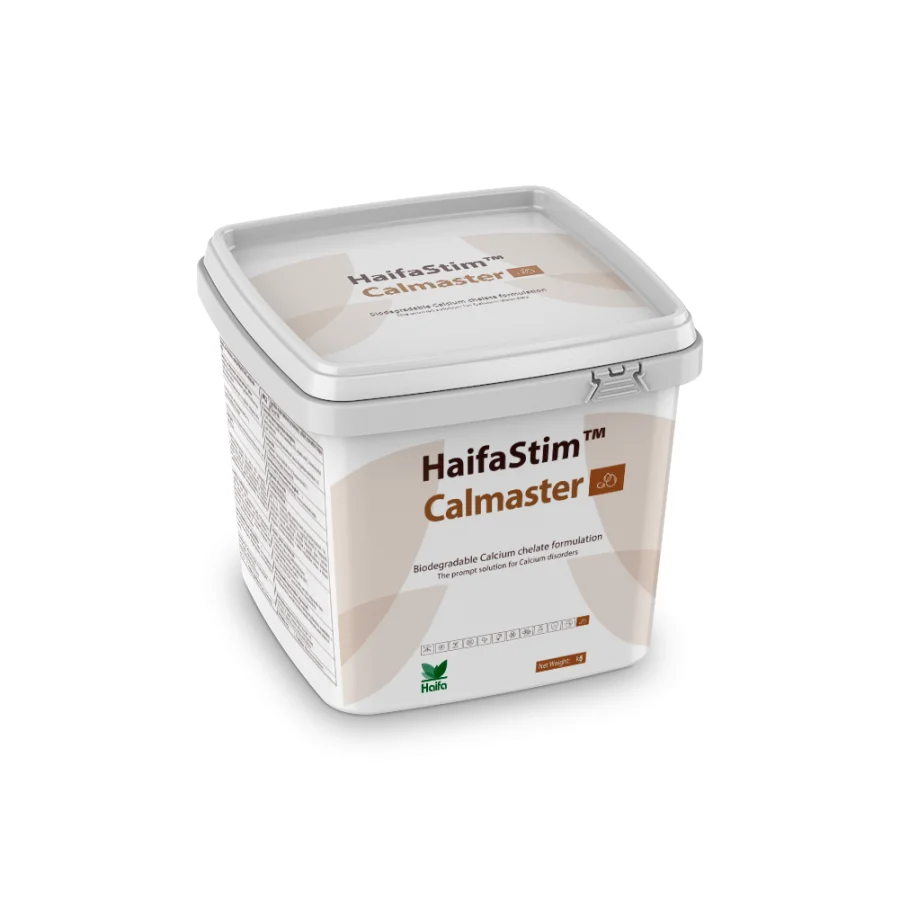
Calcium is applied foliarly from the beginning of the fruit set and repeated every 10–15 days until harvest to prevent bitter pit and improve post-harvest resistance. Iron and zinc are applied in the early stages of spring to avoid chlorosis and enhance bud differentiation.

Preferably, apply the calcium at temperatures below 25°C and during periods of low solar radiation. Before combining with plant protection products, conduct a phytotoxicity test to ensure compatibility. Foliar applications should not replace basic fertilization; instead, they serve as an essential supplement, particularly in soils with high pH levels or limited nutrient availability.

Drip irrigation

Intensive orchards primarily apply drip irrigation to apple trees, either through a drip or underground system. It allows for the targeted application of nutrients, synchronized with the phenological stages. Growers apply nitrogen and phosphorus in early spring to enhance vegetation and flowering. They also increase the supply of potassium during the transition from fruit set to fruit growth, which enhances color, sweetness, and flesh quality. Calcium is added regularly in small doses to ensure uniform absorption and prevent physiological disorders.
They usually carry out fertilization 1–2 times a week, using a solution with a conductivity of 1.5–2.0 dS/m and a pH of 5.5–6.5. Fertilizers must be completely water-soluble and low in chlorine. Farmers typically use complex formulations that often contain trace elements (Fe, B, Zn) in chelated form. Monitoring the EC in the soil solution and adjusting the program according to the phenological stage is critical for achieving quality production.

Download the complete Cultivation Plan!

The doses and growth stages mentioned are indicative and are always adjusted according to the recommendations of the agricultural consultant. Because rational fertilization is always assessed in relation to:

  • Expected yield
  • Soil characteristics
  • Planting density
  • Environmental conditions
  • Growth stage
  • Plant vigor
  • Cultivation duration
  • Hybrid
Scroll to Top