

Olive tree frost protection—basic principles
Olive tree frost protection is particularly challenging, as the tree can tolerate low temperatures only up to a threshold. Severe damage occurs when temperatures drop abruptly, when frost persists for many hours, or when the tree is at a sensitive phenological stage. As a Mediterranean species adapted to mild winters, the olive tree is increasingly exposed to frost events documented in recent years, necessitating structured frost protection strategies.
For more information on how low temperatures and frost affect tree physiology, you may also read the article “Low temperatures and frost in trees: Adaptations and impacts on growth and survival.”
Olive tree frost protection according to phenological stage
The olive tree’s frost sensitivity varies by season. During dormancy, from December to February, trees generally show higher tolerance, provided they have entered winter rest gradually. However, if prolonged warm conditions or drought have preceded cold periods, trees may remain physiologically active and become more vulnerable.
Young trees, as well as trees with recent vigorous vegetative growth, exhibit the lowest frost tolerance. Even greater sensitivity is observed in spring, when new shoots and flowering buds are actively developing, making olive tree frost protection particularly critical.
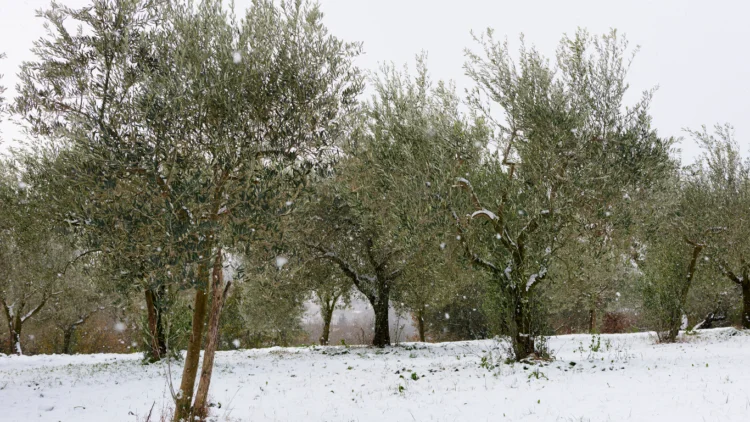
Frost damage in olive trees and tissue symptoms
Frost damage manifests in several ways. Young tissues are affected first: new shoots darken and necrotize, buds dry out, and under more severe frost conditions, bark cracking may occur on young branches.
The cambium, which is the tissue between the wood and bark, can be damaged during long periods of frost. This can cause vertical cracks to form along the trunk and main limbs. In such cases, recovery is slow, and in extreme situations, renewal pruning may be required.
University research, including studies by the University of California on frost damage, has documented how frost affects olive tree tissues.
Soil management for olive tree frost protection
Prevention is the most important measure for protecting olive trees from frost. Proper irrigation prior to frost periods is key. Soil with adequate moisture retains heat and releases it gradually overnight, reducing the risk of sudden temperature drops.
In contrast, dry soils cool rapidly. For this reason, irrigation 24–48 hours before an expected frost event significantly contributes to stabilizing the orchard microclimate
Role of nutrition and organic matter in olive tree frost protection
Organic matter is also an important factor in olive tree frost protection. Soils with higher organic matter content retain more water, improve structure, and enhance heat capacity.
In addition, balanced fertilization increases the olive tree’s tolerance to cold stress. Adequate potassium enhances cell membrane resistance, whereas calcium contributes to tissue stability. Conversely, excessive nitrogen application in late autumn should be avoided, as it promotes tender growth that is highly susceptible to frost.
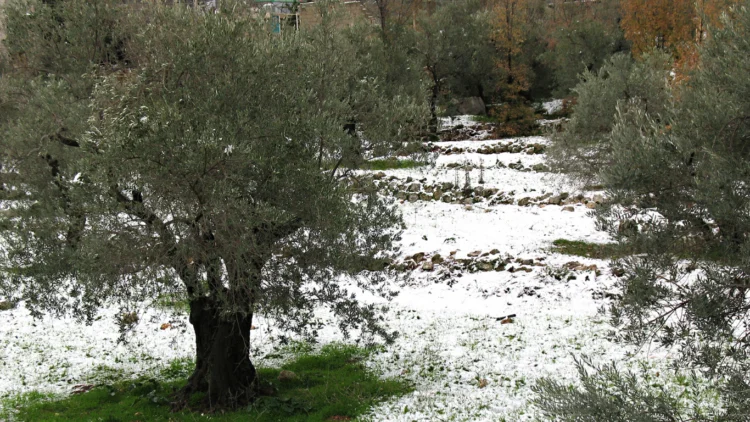
Anti-frost measures for olive tree protection
Trunk Protection in Young Trees
One of the most effective measures in young olive orchards is trunk protection. The use of white trunk guards or fabric wraps helps reduce rapid heat loss. These materials create a thin insulating air layer around the trunk and also reduce the risk of sunburn damage in the days following frost events.
Use of anti-frost fans
Anti-frost fans are a viable solution for large-scale orchards and areas prone to frequent radiation frosts. The fans recirculate warmer air from higher layers and push it toward the ground, increasing the temperature around the trees. When combined with appropriate irrigation, they can raise temperatures by up to 2°C—often enough to prevent significant damage.
Overhead sprinkler frost protection
Overhead sprinkler irrigation can also be effective under specific conditions. As water freezes on leaf surfaces, it releases heat, maintaining plant tissue temperatures slightly above the critical damage threshold. This method requires a continuous water supply, suitable equipment, and stable pressure to avoid adverse effects and, therefore, demands careful management.
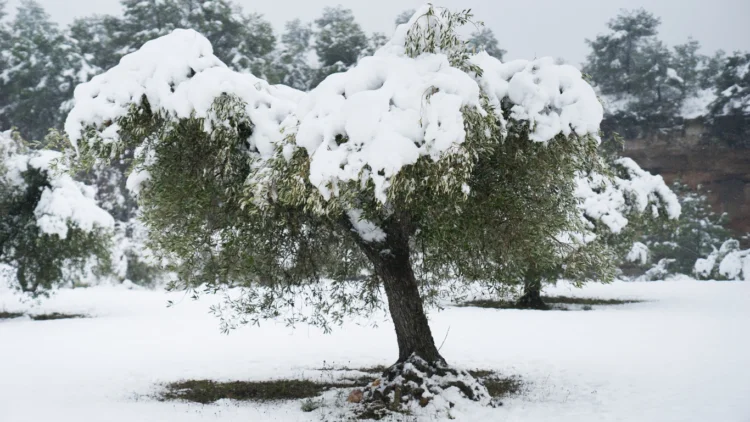
Pruning management and olive tree frost protection
Pruning management is an important component of olive tree frost protection. Heavy pruning in late autumn should be avoided, as it stimulates new growth just before winter, thereby increasing frost vulnerability. The optimal pruning period is after the end of low-temperature conditions, allowing the orchard to heal and enter spring with a strong root system and balanced vegetative growth.
Monitoring and timely intervention
Monitoring weather forecasts remains the most important tool. In regions with a history of frost events, constant readiness and timely implementation of appropriate measures are essential whenever frost risk is indicated.
Finally, the use of appropriate amino acid-based products may be considered, as they enhance tolerance to frost stress and help maintain the physiological balance of olive trees.