

Potassium requirements in grapevine—Key role in nutrition and yield
Potassium is one of the most essential nutrients for grapevine growth and productivity. It plays a role in many physiological functions, directly affects grape quality, and is necessary for proper fruit ripening.
The role of potassium in grapevine physiology, sugar translocation, and water balance regulation has been extensively documented in scientific reviews from academic institutions, including those from the University of California on potassium nutrition in grapevines.
Grapevines’ phenological stage and crop load fluctuate throughout the year, requiring targeted and balanced fertilization.
Potassium requirements in grapevines, from flowering to ripening
Grapevines show increased potassium requirements from the onset of flowering through full grape ripening. This nutrient activates enzymes that regulate sugar transport to the berries, thereby directly influencing sugar concentration and, consequently, the degree of ripeness. As crop load increases, potassium requirements in grapevines become even higher, since berries act as major sinks for sugars and organic acids.
Role of potassium in vegetative growth and water balance
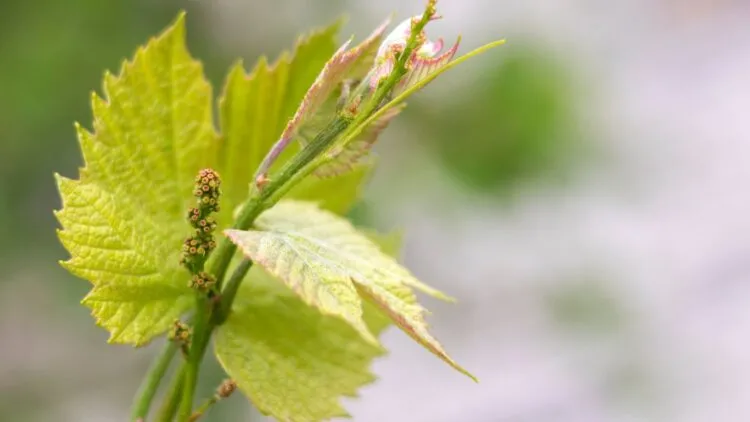
Potassium regulates stomatal opening in leaves during periods of rapid vegetative growth, thereby controlling transpiration rate. This helps grapevines withstand hot, dry weather better and maintain steady photosynthesis. In vineyards where potassium requirements in grapevines are not adequately met, increased sensitivity to heat stress, reduced growth, and deterioration of grape quality are commonly observed.
Adequate potassium supply also enhances grapevine tolerance to both biotic and abiotic stress, as discussed in the article “Grapevine: How to manage biotic and abiotic stress.”
Potassium deficiency symptoms in grapevine
Potassium deficiency appears with characteristic leaf symptoms, usually toward the end of the growing season. Leaf margins turn yellow and gradually become brown, forming necrotic areas that extend inward across the leaf blade. Symptoms begin on older leaves because potassium is a mobile nutrient that is translocated to younger tissues.
In severe cases, leaves become distorted, shoots remain thin, and berry development becomes uneven—clear indications that potassium requirements in grapevines are not sufficiently covered.
Impact of potassium requirements on grape quality
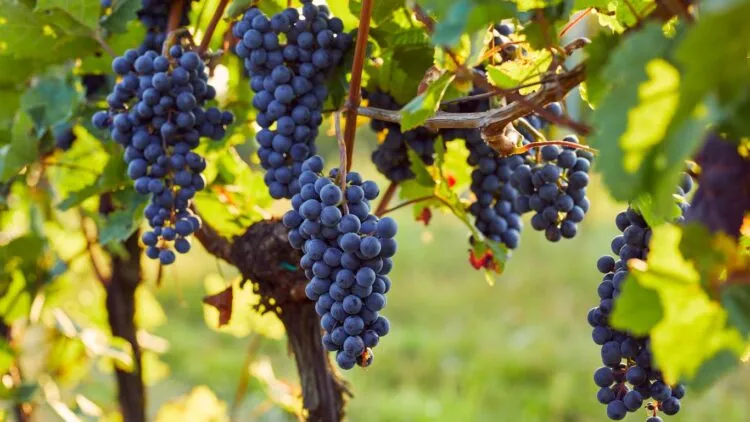
Potassium deficiency has a direct adverse effect on grape quality. Berries remain smaller, with low sugar content and increased acidity. In wine grape varieties, such a lack results in lower alcohol potential, reduced phenolic ripeness, and decreased color stability. In table grapes, insufficient potassium supply is associated with uneven berry size, reduced firmness, and inferior flavor quality.
Soil factors that increase potassium requirements in grapevines
Potassium requirements in grapevine increase significantly in soils with low cation exchange capacity, such as sandy soils. Under these conditions, potassium is leached, requiring more frequent and targeted applications.
The same problems occur in soils with high levels of magnesium or calcium because these elements compete with potassium for space in the root zone, making it harder for the plant to absorb potassium.
Fertilization and proper coverage of potassium requirements in grapevine
Potassium fertilization should be aligned with grapevine phenological stages. Base applications are typically carried out in winter to meet initial needs and support root system development.
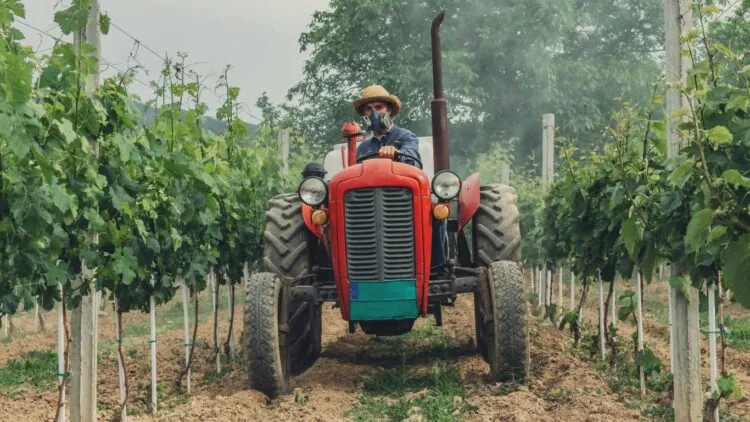
From flowering to berry softening (veraison), potassium requirements in grapevine increase markedly, and supplementary applications via fertigation or targeted use of potassium sulfate—more suitable for most varieties—are recommended. The use of potassium chloride is limited in viticulture because chloride can adversely affect fruit quality.
Nutrient balance and interactions with other elements
Adequate potassium supply enhances grapevine resistance to diseases and physiological disorders. Plants that fully meet potassium requirements develop stronger tissues, better manage water stress, and show increased tolerance to fungal infections.
Conversely, excessive potassium fertilization may restrict magnesium and calcium uptake, leading to nutritional imbalances that negatively affect vine health.
Conclusion
Potassium requirements in grapevine are a critical factor for stable growth, grape quality, and overall vineyard productivity. Proper evaluation through soil analysis and leaf diagnostics, combined with targeted applications at appropriate phenological stages, enables effective nutrient management.
With balanced potassium nutrition, grapevines can achieve high-quality, high-yield production in both wine and table grape cultivation.