

The role of micronutrients in fertilization
Micronutrients in fertilization play a critical role in flowering, fruit set, fruit filling, crop quality, and disease resistance, even though they are required in very small amounts. Fertilization programs often prioritize macronutrients like nitrogen, phosphorus, and potassium. However, yield and quality do not depend solely on these elements. Micronutrients in fertilization regulate key physiological processes that directly affect plant performance.
Even a slight micronutrient deficiency—often invisible at first glance—can lead to significant yield losses and quality deterioration. This is why micronutrients in fertilizers should never be considered secondary inputs.
For this reason, micronutrients in fertilization are a fundamental tool for stable yields and consistent quality. Their importance has been extensively documented in international scientific literature, as they influence critical physiological mechanisms and overall crop productivity, as highlighted in reviews published in the International Journal of Current Microbiology and Applied Sciences.
Role and importance of micronutrients in fertilization
In practice, micronutrients in fertilization act synergistically. Their effectiveness depends on balanced supply, appropriate ratios, and the use of suitable chemical forms that ensure availability to the plant.
-
Boron (B)
Role: Boron regulates pollen formation, fruit set, sugar translocation, and cell wall synthesis.
Deficiency: In vineyards and olive orchards, boron deficiency leads to poor fruit set and fruit deformation or shrinkage.
Interactions: Boron works closely with calcium (Ca) to maintain tissue stability. Caution is required in soils with high calcium levels, as boron uptake may be limited.
-
Zinc (Zn)
Role: Zinc is involved in hormone synthesis (auxins), photosynthesis, and the development of shoots and leaves.
Deficiency: In cereals, zinc deficiency results in smaller grains and reduced protein content. In walnut and citrus trees, it causes small leaves and shortened internodes (“rosetting”).
Interactions: Zinc demand often increases with higher nitrogen fertilization.
In such cases, the application of chelated zinc forms, such as AgriZn-EDTA (Zn 15.0%), supports adequate micronutrient supply.

-
Iron (Fe)
Role: Iron is essential for chlorophyll formation, even though it is not a structural component of the molecule. It regulates photosynthesis and redox reactions.
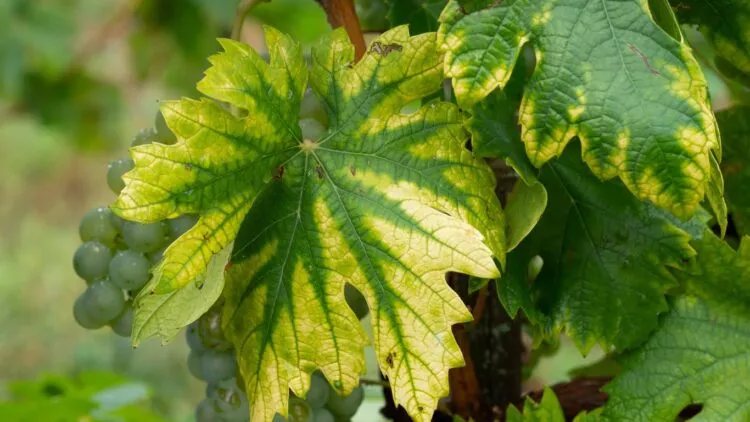
Deficiency: Iron deficiency appears as chlorosis on young leaves (yellowing with green veins). It is a common problem in citrus and vineyards, especially in calcareous soils.
Interactions: Iron competes with manganese (Mn), copper (Cu), and zinc (Zn). High soil pH (>7.5) dramatically reduces iron availability.
Under these conditions, stable chelated iron forms are required, such as AgriFe-EDDHA 4.8% o-o (Fe 6.0%) or AgriFe-EDTA (Fe 13.0%).
-
Manganese (Mn)
Role: Manganese activates enzymes involved in photosynthesis and lignin synthesis and contributes to plant resistance against pathogens.
Deficiency: It causes interveinal yellowing and reduced photosynthetic activity and is commonly observed in alkaline soils.
Interactions: Manganese competes with iron (Fe) and zinc (Zn). Maintaining the correct Fe/Mn ratio is essential.
Targeted manganese applications, such as AgriMn-EDTA (Mn 13.0%), help restore photosynthetic efficiency.
-
Copper (Cu)
Role: Copper participates in protein metabolism and cell wall stability and plays a key role in disease resistance.
Deficiency: Symptoms include delayed flowering, distorted leaves, and reduced plant vigor. In cereals, copper deficiency leads to “white heads” with empty grains.
Interactions: Copper interacts with zinc and iron. Excessive copper use (e.g., repeated copper sprays) may lead to toxicity.
-
Molybdenum (Mo)
Role: Molybdenum is crucial in nitrogen metabolism and is required for nitrate reductase activity. Without Mo, plants cannot efficiently utilize nitrogen.
Deficiency: Symptoms resemble nitrogen deficiency, including leaf yellowing and stunted growth. In vegetables, it may cause “whiptail” symptoms.
Interactions: Molybdenum is especially important in legume crops, where it supports nitrogen fixation by symbiotic bacteria.
-
Chlorine (Cl)
Role: Chlorine participates in osmotic regulation and photosynthesis. Despite its negative reputation due to salinity issues, it is essential in small amounts.
Deficiency: Rare, but may cause leaf wilting and reduced drought tolerance.
Interactions: Excess chloride (e.g., from potassium chloride fertilizers) can cause salinity stress.
-
Nickel (Ni)
Role: Nickel is required for urease activity, enabling plants to metabolize urea and utilize nitrogen efficiently.
Deficiency: Poorly studied, but may lead to urea accumulation in leaves, causing necrotic spots and toxicity symptoms.
Interactions: Special attention is needed when fertilization relies heavily on urea, as insufficient nickel limits nitrogen utilization.
How micronutrients in fertilization interact
- Balance of Fe, Mn, Zn, and Cu: An excess of one element reduces the availability of others.
- Boron + Calcium: Improve fruit set and strengthen cell walls.
- Molybdenum + Nitrogen: Without Mo, nitrate nitrogen cannot be efficiently used.
- Potassium + Boron: Potassium enhances sugar transport, while boron enables sugar utilization and storage in fruits.
What happens when micronutrients are deficient in fertilization
Boron (B)
- Symptoms: Poor flowering and fruit set, small or misshapen fruits, and cracking in productive trees.
- Production impact: Reduced number of fruits per plant or tree, irregular fruit shape, and lower market value.
- Favorable conditions for deficiency: Sandy soils, high soil pH, and drought.
Zinc (Zn)
- Symptoms: Small, narrow leaves (“rosetting”), shortened internodes, and interveinal chlorosis on young leaves. In cereals, delayed growth and reduced grain size are common.
- Production impact: Reduced biomass and lower protein content in grains.
- Favorable conditions for deficiency: Calcareous soils, low organic matter, and very high phosphorus applications (Zn antagonism).
Manganese (Mn)
- Symptoms: Interveinal chlorosis similar to iron deficiency, often accompanied by small necrotic spots. In cotton and cereals, symptoms may appear as a greyish discoloration (“grey speck”).
- Production impact: Reduced photosynthetic activity and increased susceptibility to diseases due to limited lignin synthesis.
- Favorable conditions for deficiency: Alkaline soils, dry seasons, and excessive liming.
Copper (Cu)
- Symptoms: Curling of young leaves, dieback of shoot tips, and in cereals, the appearance of “white heads” with empty grains.
- Production impact: Poor fruit set, reduced pollen fertility, and high vulnerability to fungal diseases.
- Favorable conditions for deficiency: Organic soils and sandy soils with low copper availability.
Iron (Fe)
- Symptoms: Chlorosis on young leaves, characterized by yellowing with green veins.
In severe deficiency, leaves may become almost white. - Production impact: Very low photosynthetic capacity, leading to poor growth and reduced yield.
In citrus and grapevines, fruit quality can decline dramatically. - Favorable conditions for deficiency: Calcareous and alkaline soils (pH > 7.5), high carbonate content.
Molybdenum (Mo)
- Symptoms: Symptoms resemble nitrogen deficiency: leaf yellowing and stunted growth.
In cauliflower, it may cause “whiptail” (narrow, distorted leaves). - Production impact: Poor nitrate utilization and, in legumes, reduced biological nitrogen fixation in root nodules.
- Favorable conditions for deficiency: Acidic soils (pH < 5.5).
Chlorine (Cl)
- Symptoms: Visible deficiency is rare but may cause leaf wilting and reduced drought tolerance.
- Production impact: Impaired osmotic regulation and reduced photosynthetic efficiency.
- Favorable conditions for deficiency: Areas with very low salinity or crops with higher chlorine requirements (e.g., palms).
Nickel (Ni)
- Role: Essential for the activity of urease, the enzyme responsible for breaking down urea and releasing nitrogen in a usable form.
- Deficiency symptoms: Accumulation of urea in leaves, leading to necrotic spots and leaf burn. In fruit trees (e.g., pecan), stunted shoots and reduced spring growth have been reported.
- Production impact: Poor urea utilization, reduced growth, and delayed flowering.
- Favorable conditions for deficiency: Acidic or very sandy soils and continuous use of urea-based fertilizers without adequate nickel supply.
In practice, accurate diagnosis and timely correction of micronutrient deficiencies in fertilization yield real gains and measurable results.
Conclusion
Micronutrients in fertilization act as regulators of yield and quality and should never be considered secondary. Their balanced supply directly affects flowering, fruit set, crop quality, and overall productivity. When micronutrients are applied correctly and in suitable forms, hidden deficiencies are minimized, fruit set improves, and yield stability is enhanced. In challenging soil conditions—such as exceptionally high pH or calcareous soils—chelated forms can make a decisive difference in fertilization efficiency.