

Leaf chlorosis in trees—what is it?
Leaf chlorosis in trees refers to the yellowing of leaves caused by a reduction or uneven distribution of chlorophyll. It is one of the most common symptoms observed in both ornamental and fruit trees and may result from a wide range of factors affecting plant physiology and nutrient uptake.
Chlorosis itself is not a diagnosis but a visible sign that a key physiological process in the tree has been disrupted. As outlined in FAO guidelines on plant nutrient deficiencies, accurate interpretation of leaf chlorosis in trees requires careful observation of where symptoms appear, when they develop during the growing season, and how they progress over time.
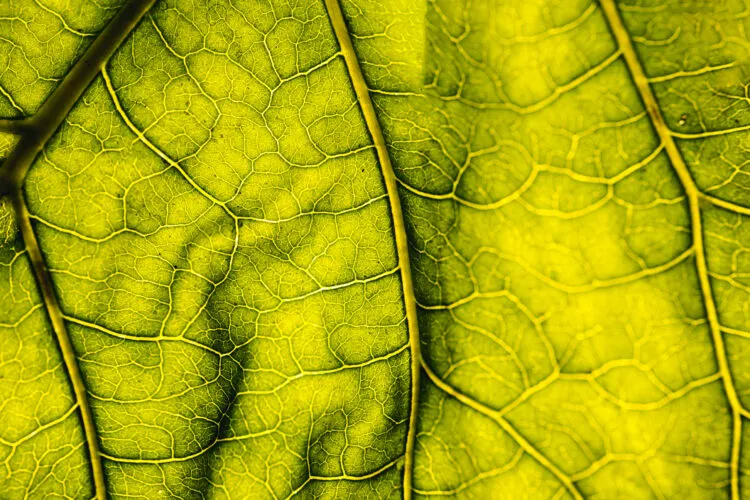
Nutrient deficiencies that cause leaf chlorosis in trees
One of the most frequent causes of leaf chlorosis in trees is nitrogen deficiency. Nitrogen is a mobile nutrient within the plant, and when it becomes limited, it is relocated from older leaves to younger tissues. As a result, older leaves gradually turn yellow, while new growth remains green. As the article on nitrogen fertilization in apricot trees explains in detail, a lack of nitrogen can lead to less vigor and weak shoot development.
A lack of potassium is also closely linked to trees’ leaves turning yellow. Insufficient potassium causes yellowing along leaf margins, which may later turn brown and dry out. Potassium controls water balance and stomatal function, so trees with low potassium levels are more likely to suffer from heat and drought stress.
Interveinal chlorosis is a common sign of magnesium deficiency. This is when the tissue between the veins turns yellow while the veins stay green. Because magnesium is a core component of chlorophyll, its deficiency directly limits photosynthesis. This form of leaf chlorosis in trees is more common in acidic soils or when excessive potassium fertilization competes with magnesium uptake.
Iron, unlike nitrogen and magnesium, is not readily mobile within the tree. For this reason, iron deficiency primarily affects young leaves. The yellowing is pronounced, with green veins and a pale interveinal area. This symptom is particularly common in soils with a high pH where iron is present but not readily available for uptake, as discussed in our article on iron deficiency in citrus trees.
Deficiencies of calcium and boron may also cause leaf chlorosis in trees and are often accompanied by shoot tip dieback or deformation of young leaves. Calcium contributes to cell wall stability, while boron plays a critical role in meristem development. Deficiency symptoms are usually most pronounced in actively growing tissues.
Environmental factors contributing to leaf chlorosis in trees
Water stress and nutrient imbalance both strongly influence leaf chlorosis in trees. Prolonged over-irrigation or poor drainage creates anaerobic soil conditions that impair root function and nutrient uptake. When soils remain saturated for extended periods, generalized leaf yellowing often develops.
Conversely, prolonged drought restricts nutrient mobility and root activity, leading to pale, dull foliage. In both cases, water availability directly affects nutrient transport within the plant.
Climatic stress also plays a significant role. Frost damage can disrupt cell membranes and physiological processes, resulting in chlorotic symptoms. High temperatures and dry winds increase transpiration and stress, often leading to leaf yellowing and premature leaf drop.
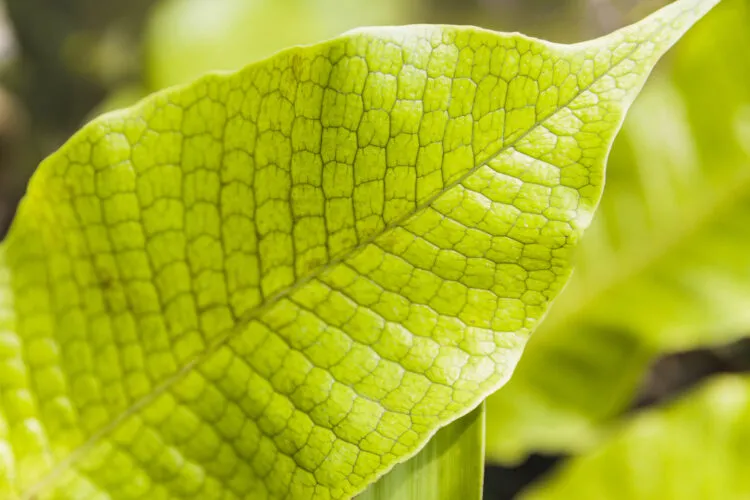
Root diseases and leaf chlorosis in trees
Diseases affecting the root system, such as Phytophthora infections or fungal collar rots, may cause leaf chlorosis in trees when vascular tissues are compromised. Reduced transport of water and nutrients weakens the foliage, leading to loss of green color. Stunted growth and an overall unhealthy appearance often accompany these symptoms.
Excessive fertilization and nutrient imbalances
Deficits do not exclusively cause leaf chlorosis in trees. Excessive fertilization can also lead to yellowing. High nitrogen inputs may produce soft, overly vigorous growth that is prone to chlorosis, whereas excessive potassium can inhibit magnesium and calcium uptake. Nutrient imbalances directly affect leaf color and overall tree vitality.
How to manage leaf chlorosis in trees
Because leaf chlorosis in trees has no single cause, diagnosis must be systematic and evidence-based. Soil analysis, leaf tissue testing, and careful evaluation of irrigation practices are essential tools for identifying the underlying problem. Understanding the contributing factors enables corrective measures to restore normal physiological function through targeted nutrition and improved environmental management.
Conclusion
Leaf chlorosis in trees is a symptom, not a disease, and effective management depends on accurate diagnosis. By combining analytical tools, careful field observation, and balanced nutrient management, trees can recover normal leaf color, restore physiological function, and maintain long-term productivity.