

Boron in crops is one of the most misunderstood micronutrients. Even though plants need it in minimal quantities, a deficiency can seriously disrupt flowering, pollination, fruit set, and overall fruit quality. What makes things even more challenging is that growers often fail to recognize the symptoms early, since they can easily be confused with other nutrient disorders.
In this article, we break down five of the most common myths about boron in crops and explain what’s actually true—in a simple, practical, grower-friendly way.
Myth 1: All crops need the same amount of boron
This statement is entirely inaccurate. Boron in crops plays a critical role in several plant species, especially in:
-
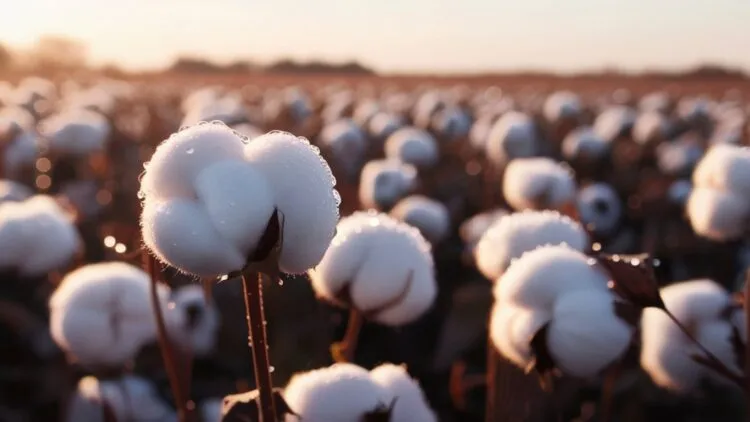
Cotton
-
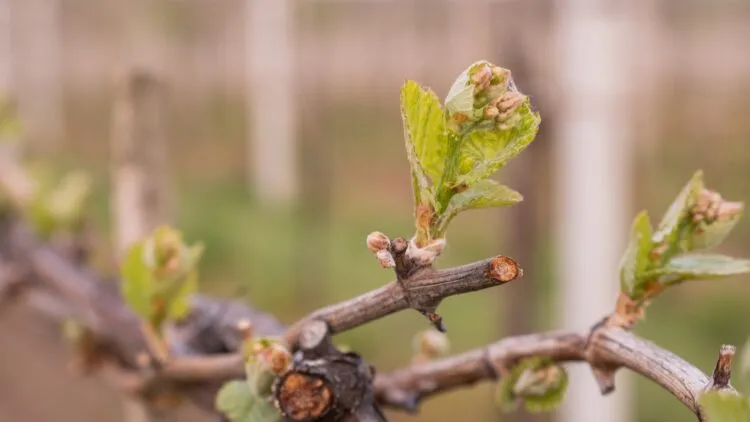
Grapevines
-
Sunflower
-
Sugar beet
-
Almonds and other tree crops
-
Cabbage, broccoli, and cauliflower.
If you want to see how boron affects a major Mediterranean crop, refer to this article: “Boron in olive trees: its role in flowering and fruit set.”
These crops have high boron requirements because boron is essential for pollen development, pollination, and the successful “setting” of fruits. When boron in crops is insufficient, growers typically observe flower drop and weak fruit set.
In other crops, such as cereals or forage species, boron demand is much lower. This implies that the boron requirement varies by crop, with no universally applicable level.
Understanding how boron in crops works makes it easier to avoid serious deficiencies.
Myth 2: The more boron you apply, the better
This is one of the most dangerous misconceptions. Boron has a very narrow range between sufficiency and toxicity.
The gap between the correct dosage and an excessive one is small. Just a few extra grams per acre can cause leaf burn, wilting, or poor plant development.
This is why a soil test or leaf analysis should always come first. Boron should never be applied “blindly.” Proper management of boron in crops is the only way to avoid toxicity problems.
Myth 3: Most soils naturally contain enough boron
Not exactly. In many regions of Greece, boron deficiency is actually quite common, especially in:
- Sandy soils, where boron is readily leached out of the root zone.
- Calcareous soils, where it becomes bound, unavailable, and cannot be absorbed by plants.
- Intensively irrigated fields experience accelerated boron leaching due to frequent watering.
Boron is one of the micronutrients that gradually depletes over time. This means that testing is the only reliable way for a grower to know what is truly available in the soil. Regular monitoring ensures that boron levels in crops remain within safe and adequate limits.
Myth 4: Boron moves easily within the plant
In reality, boron is almost immobile within plant tissues. This means it cannot move from older leaves to newer growth.
What does this mean in practice? The first symptoms of boron deficiency appear in young leaves, new growing tips, and developing fruits. Flowers may become deformed, drop prematurely, or fail to fertilize. Fruits may form poorly, crack, or develop uneven texture.
Therefore, to ensure proper nutrition, boron must be supplied either gradually through the root system or through repeated foliar applications during key growth stages.
Myth 5: All fertilizers contain boron
False. Most basic or compound fertilizers (e.g., NPK blends) do not contain boron unless it is clearly stated on the label. If the packaging lists only the main macronutrients (e.g., 15-15-15), it includes no micronutrients—and no boron.
To support your plants with boron, you have two options:
- Granular or liquid fertilizers containing boron, which are usually applied pre-planting or during specific growth stages
- Foliar sprays, especially during flowering, fruit set, or fruit development
Because boron is a sensitive nutrient, correct dosage is essential and should always follow agronomist recommendations. When properly applied, boron in crops improves fruit set, quality, and overall yield.
Key takeaways
- Boron in crops is essential, but growers must apply it accurately.
- Different crops have different boron needs.
- Deficiency symptoms first appear in young tissues.
- Not all fertilizers contain boron—always check the label.
Conclusion
Boron may be a micronutrient, but its impact on plant reproduction and fruit quality is massive. It directly affects flowering, pollination, and yield. Misconceptions around boron often lead to mistakes—either through underapplication or excessive use.
With accurate diagnosis, proper timing, and the correct application method, growers can fully benefit from boron in crops while avoiding any associated risks. Boron doesn’t need to be applied in large amounts—just in the right amount, at the right time, and in the right way.